The African Union (AU) and the European Union (EU) have successfully concluded the fifth AU-EU expert seminar on transitional justice, held from June 19 to 20, 2025, in Abuja, Nigeria. Hosted under the Initiative for Transitional Justice in Africa (ITJA), and led by ICTJ in collaboration with the Africa Transitional Justice Legacy Fund (ATJLF) and the Centre for the Study of Violence and Reconciliation (CSVR), the seminar brought together more than 50 experts, policymakers, researchers, and civil society representatives under the theme “Reparations and Transitional Justice: Perspectives and Approaches from Africa and Europe.” The discussions underscored the critical role of reparations in fostering justice, reconciliation, and sustainable peace. The event also underlined that the AU-EU partnership, now celebrating its 25th anniversary, stands firm in its work for shared values and universal human rights and is committed to protecting and promoting inclusive and effective multilateralism.
Highlighting Reparations as a Cornerstone of Transitional Justice
The seminar opened with insightful remarks from key stakeholders who emphasized reparations as a legal and moral imperative central to the success of transitional justice efforts. Their reflections underscored reparations not only as a tool for redress but as a foundational step toward healing, reconciliation, and durable peace.
“Transitional justice is a vital instrument for rebuilding societies, particularly in post-conflict settings,” said Ambassador Bankole Adeoye, Commissioner for Political Affairs, Peace and Security at the African Union Commission (AUC), highlighting transitional justice’s essential role in post-conflict reconstruction in his opening statement. He further emphasized that the AU theme of the year prioritizes state-building through the correction of historical injustices.
“Transitional justice is linked to peacebuilding, to the prevention and resolution of conflicts and sustainable development,” reaffirmed Rita Laranjinha, Managing Director for Africa at the European Union External Action Service (EEAS). “From Africa to Europe, societies are grappling with the demands for accountability, redress, and recognition, not only in the aftermath of armed conflict and repression, but also in the face of structural and historical injustices. Transitional justice offers a path to restoring truth, to upholding human dignity, and to lasting peace.”
“We are every day working for a better, more just world for the victims… The field of human rights and the remedies of transitional justice are still evolving and still growing,” stated Anna Myriam Roccatello, Deputy Executive Director of ICTJ, highlighting the ongoing development of transitional justice frameworks.
The panel sessions tackled pressing questions surrounding reparations, emphasizing their pivotal role in addressing historical injustices and driving transformation in post-conflict societies. Participants examined the multifaceted dimensions of reparations, drawing lessons from case studies in the Democratic Republic of Congo, the Gambia, Kenya, and Morocco. Discussions underscored the significance of gender-responsive reparations and the integration of rehabilitation frameworks to support trauma-affected communities. Additionally, the vital role of civil society was highlighted as essential for ensuring inclusivity, amplifying victims’ voices, and promoting accountability in reparations processes.
“Reparations are not only a right of the victims who have suffered gross human rights violations, but they’re the duty of the states where violations have occurred… Reparations should seek to advance the goals of recognition, civic trust, and social solidarity,” emphasized Roccatello, echoing these themes.
Environmental justice emerged as a pivotal theme during the seminar, with experts highlighting the profound ecological impacts of conflict and resource exploitation in post-conflict settings. The exchange emphasized the urgent need for accountability alongside sustainable strategies to promote ecological repair and long-term recovery. The dialogue also examined sustainable funding models vital to supporting reparations programs over the long term.
Collectively, the conversations reaffirmed reparations as a cornerstone of transitional justice—a critical mechanism for enabling redress, fostering reconciliation, and paving the way for lasting peace and social transformation. They affirmed the importance of context-specific reparations processes.
“There is no one-size-fits-all solution in each and every post-conflict situation; we really need to have a victim-centered approach that really takes into account the local context,” stressed Helena Boguslawska, Deputy Head of the Human Rights Division at EEAS.
Strengthening Multilateral Cooperation
The outcomes of the 2025 seminar reaffirmed the AU and EU’s strong commitment to delivering justice for victims and advancing the principles of the African Union Transitional Justice Policy (AUTJP). These joint efforts aim to ensure that reparations programs provide meaningful redress while contributing to broader societal transformation.
The seminar concluded with a high-level dialogue among key stakeholders, centered on strengthening multilateral cooperation. Discussions emphasized the importance of aligning international standards with regional and local realities, while enhancing collaboration on funding, technical assistance, and monitoring of reparations programs.
“The collaboration among the three partners [AU, EU, and United Nations] has been helpful towards implementations of three instruments in the two regions [Africa and Europe],” said Dr. John Ikubaje, Head of the Transitional Justice Unit at AUC.
“Long-term accompaniment is absolutely essential, as these processes truly take time. From the examples we’ve seen, it often takes years of sustained effort, especially within governing structures. This makes ongoing support critical, including technical assistance over the years, to help national institutions build the capacity to address transitional justice issues and manage complex reparation processes,” shared Boguslawska.
A coordinated approach among the AU, EU, and United Nations is expected to drive more effective, context-sensitive, and sustainable reparations initiatives across Africa and Europe.
_____________
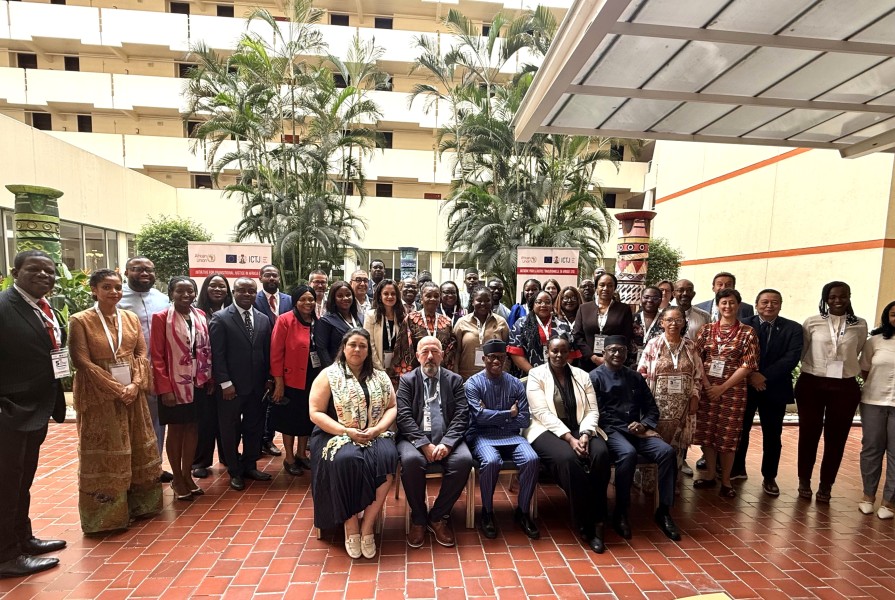
PHOTO: Participants in the AU-EU expert seminar on transitional justice held in Abuja, Nigeria, on June 19-20, 2024, pose for a group photo. (ICTJ)