
At the end of April in Syria, dozens of local residents in several cities and towns sat down together for the first time to finally speak about their experiences during the 14-year conflict that tore society apart and resulted in countless human rights violations. These community dialogues, organized by ICTJ in partnership with the Bridges of Truth project, provided a safe space for participants to share their stories and hardships, discuss their needs, and express their hopes for justice and reconciliation.
“The Bridges of Truth team has been listening to victims for years, but these dialogues were the first time we did so inside Syria, in the very places where violations occurred,” explained Nousha Kabawat, head of ICTJ’s Syria program. “We sat with people still living in the shadows of detention centers, destroyed homes, and broken systems. We heard their stories in their own towns, among the ruins, which brought a level of urgency to the call for truth that no conversation abroad ever could.”
The Bridges of Truth project is a collaboration of seven leading Syrian civil society organizations and ICTJ. Launched in 2017, the project raises awareness about the plight of detainees, the forcibly disappeared, and their families and advocates for justice for the innumerable victims of the Syrian conflict and the former regime’s repression.
The moderated dialogue sessions were held from April 28 to 30 in seven cities and towns across Syria: Damascus, Daraa, Al-Nabk, Homs, Salmiya, Al-Atarib, and Afrin. An eighth session, planned for As Suwayda, was canceled due to security concerns. The ICTJ-led team consisted of eight facilitators from the Bridges of Truth partner organizations, along with psychosocial support counselors who helped ensure participants felt comfortable to speak up, local partners who helped coordinate the sessions, and notetakers. ICTJ and the Bridges of Truth have recently published a new report presenting findings from the sessions, as well as recommendations.
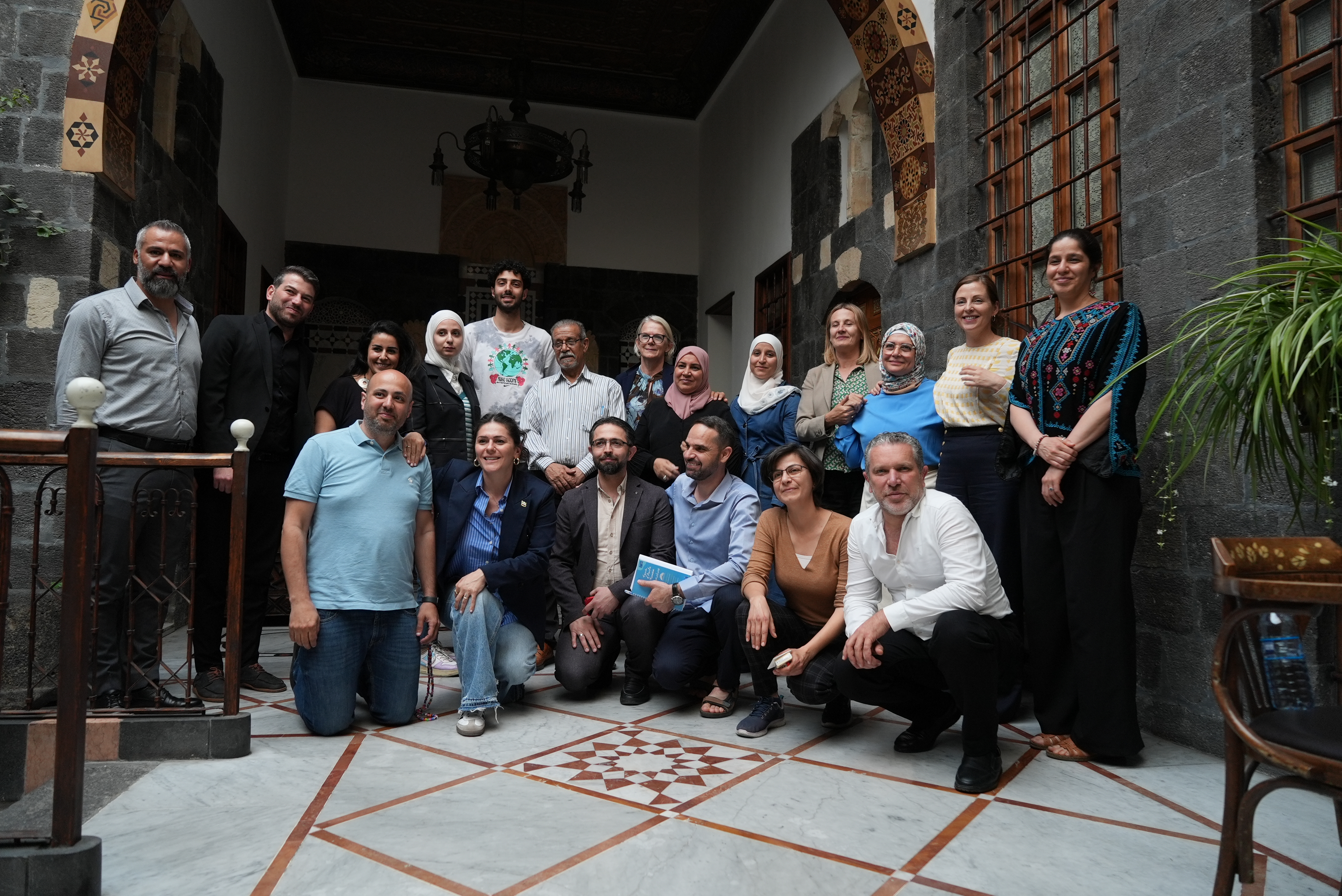
Each session brought together some 20 participants from diverse ethnic, religious, and sectarian backgrounds, including male and female victims, former detainees, displaced persons, lawyers, and representatives of community groups.
The sessions aimed to gain a deeper understanding of what peace, justice, and repair mean to everyday Syrians and how best to achieve sustainable peace and deliver justice from their perspectives. “I used to think no one cared to listen to us. All these years, we have only talked among ourselves,” said one participant in the Homs session. “Today was the first time I felt a real ear listening.”
The sessions covered thematic topics including accountability, truth seeking, civic peace, and reparations. The facilitation team tailored the discussions to the local context, avoiding complex political or legal terms and making sure everyone could take part in them. They grappled with tough questions, such as what do Syrians think after the fall of Bashar al-Assad's regime, what kind of justice should people pursue, and how can civic peace be restored.
Surprisingly, the participants demonstrated a real eagerness to talk about the various topics, to passionately express their opinions and ideas about the future, and even to open up about sensitive issues related to violations they suffered and their ongoing needs. They often began by speaking earnestly about their losses, their fears, and their desire to understand what happened and regain their dignity. They shared stories about neighbors who disappeared without farewell and loved ones for whom they waited for years, sometimes decades, without any news.
Participants recounted experiences of homelessness and unemployment or the loss of wages amid corruption and lawlessness. They also lamented the deprivation of education and inadequate health care for their children. From the testimonies, it was clear that women and children were among those who suffered the most. “We did not just lose schools, we lost childhood itself,” explained a retired teacher.
Many participants called for a broader definition of “victim,” not limited to, for example, those who were imprisoned or tortured but that includes those who lost their jobs, those whose children could not attend school, and those who faced social exclusion. “I am a victim, but I was not imprisoned. My children were deprived of schooling, and I lost my job,” said one woman participant in the Al-Nabk session.
Women participants underscored the importance of providing safe spaces for them to voice their concerns. As one participant in the Afrin session said, “I need to speak, but not in front of everyone. I want a place where I am not just a victim.”
By and large, participants regarded justice as a critical national issue, with most calling for a just state and an honest judiciary. However, they also recognized the enormous challenges to any meaningful accountability, most notably judicial corruption. Moreover, many participants viewed the judiciary and other state institutions as sources of oppression and injustice rather than bastions or guarantors of justice. One participant asked, “How can you hold someone accountable when the judge himself signed death sentences?”
For many, justice was more than just a legal remedy, instead seeing it as a part of a wider social transformation that begins with the people and involves the rebuilding of civic trust and personal and societal reconciliation. “Justice does not start at the court,” said one participant in the Daraa session. “It starts on the street, with us believing in each other again.”
Ultimately, participants agreed that transitional justice is essential for peace, justice, and the restoration of civic trust in Syria. But, as their testimonies made undeniably clear, any meaningful process requires providing space, such as public consultations, for people to share their experiences, name the violations they endured, and articulate their vision for justice. Moreover, these consultations must be conducted with great care. Without the right preparation, support, and framing, they risk reopening wounds without offering a path forward.
“It is not enough to ask people to speak about their pain,” stressed Kabawat. “We must also create an environment where they can reflect on the past while imagining a future, without reinforcing fear, anger, or division. When done thoughtfully, public consultations can lay the groundwork for civic trust and a shared commitment to justice.”
___________
FEATURE PHOTO: Residents of Homs share stories as well as their thoughts about how to achieve lasting peace and justice in Syria during an ICTJ-led community dialogue session on April 28. (Abedalbaset Alhasan/ICTJ)