229 results

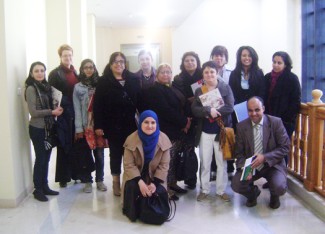
An ICTJ immersion course brought together women from Egypt, Yemen, Syria, and Libya to closely observe Tunisia’s emerging experience in transitional justice, including the ways in which issues of gender-based violence and the experiences of women are being addressed.

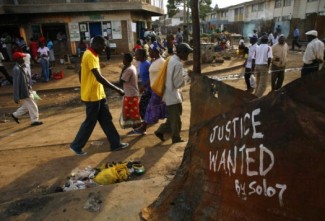
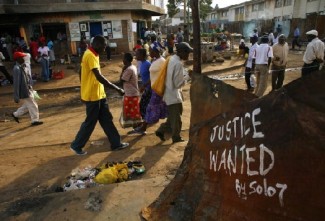
ICTJ released a briefing paper today examining current opportunities for prosecuting serious crimes within Kenya’s national judicial system, including crimes committed during the postelection violence of late 2007 and early 2008 (PEV), which claimed 1,113 lives and displaced an estimated 660,000 people. Titled “Prosecuting International and Other Serious Crimes in Kenya,” the paper looks at legal and institutional reforms that may be needed at the national level to effectively investigate and prosecute the worst crimes of the PEV period, including murder, serious assault, and rape.

This briefing paper focuses on the topic of prosecuting international and other serious crimes in Kenya, including crimes committed in the context of the postelection crisis of late 2007 and early 2008. In particular, it identifies and analyzes obstacles and opportunities for such pro...

This opinion piece by Eduardo González, director of the Truth and Memory program at ICTJ, asks: can you build a solid, legitimate democracy on the sands of silence, or does truth provide a more trustful foundation?

ICTJ’s president David Tolbert will be one of the featured speakers at this year’s Al Jazeera Forum in Doha, Qatar, which aims to explore the complex transformation of the socio-political and media landscapes of the Middle East and North Africa.

In this edition of ICTJ's Program report, Kelli Muddell, director of ICTJ's Gender Justice program, reflects on ICTJ’s vision of gender justice, the challenges facing survivors of sexual and gender-based violence in times of transition, and how ICTJ is working to address inequality in countries like Colombia, Nepal, and Tunisia.

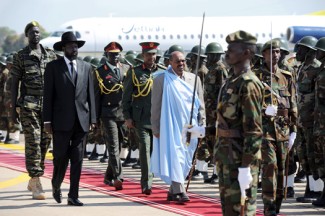
In a major effort to promote accountability for serious crimes in Africa, ICTJ joined hundreds of human rights groups and transitional justice partners to ask the African Union to prioritize justice. Addressed to the new African Union (AU) Chairperson Dr. Nkosazana Dlamini-Zuma, the letter warns that strained relationships between the AU and the International Criminal Court (ICC) may put justice at risk.

The International Center for Transitional Justice (ICTJ) signed a cooperation agreement with the Tunisian government on January 16 to provide further technical assistance in establishing transitional justice mechanisms in the country. The development comes two years after protests forced President Zine El Abidine Ben Ali to step down and flee the country in January 2011.

The findings of Kenya's Truth, Justice and Reconciliation Commission (TJRC) were due to be released in August of this year, providing citizens with a comprehensive report that establishes the facts, causes and alleged perpetrators of serious crimes in Kenya since its independence, almost 50 years ago. To date, Kenyans are still waiting to learn the truth.

The latest ICTJ Program Report presents ICTJ’s work in Africa. In a deeply insightful interview, Suliman Baldo, director of ICTJ’s Africa program and one of the world’s leading experts on transitional justice in Africa, discusses transitional justice processes in Ivory Coast, Kenya, Democratic Republic of Congo, and Uganda.