
395 results

The ICTJ Program Report is a new online feature that presents ICTJ’s work and impact around the globe. Through monthly in-depth interviews with our experts, the ICTJ Program Report will offer a view of ICTJ’s work on reparations, criminal justice, truth and memory and other transitional justice developments in countries where we work. To launch the series, we speak with Paul Seils, ICTJ's vice president and the head of our Program Office.

Argentina’s trials for crimes committed during the dictatorship of military juntas are widely seen as a successful national effort to seek accountability for past abuses. And while victims’ demands for justice continue to remain high, the judiciary is facing challenges to ensure the cases are dealt with expeditiously and fairly. In a interview for ICTJ's Spanish podcast series "Lessons from Latin America," Mirna Goransky, Assistant General Prosecutor for the Attorney General’s Office shares her perspectives on human rights trials in Argentina.

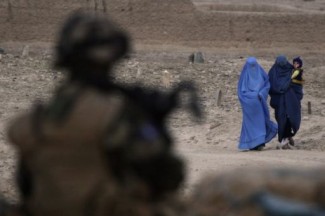
In 2006, the Afghanistan Independent Human Rights Commission (AIHRC) launched an unprecedented effort to document the violations of international humanitarian law in Afghanistan between 1978 and 2001. Though it has not yet been made public, the 1000-page AIHRC Conflict Mapping Report ...

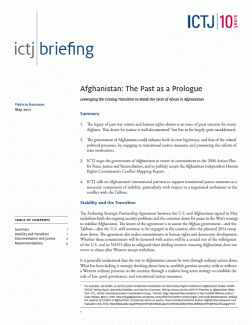
As new evidence of past violations comes to light, Afghanistan must prioritize transitional justice measures to break the cycle of abuse. ICTJ's new briefing paper provides analysis of past reports identifying the patterns of abuses and puts forth recommendations to the government of Afghanistan.

In collaboration with the Brookings-LSE Project on Internal Displacement, ICTJ’s Research Unit examined how transitional justice can be used to address the range of injustices associated with displacement and thereby serve as part of a comprehensive approach to the resolution of displ...

As we mark July 17, designated International Justice Day by the states parties of the International Criminal Court (ICC) just over two years ago, we should not limit our focus to the work of the court or criminal justice as such. Pursuing justice in the aftermath of atrocity presents an opportunity to do three crucial things: reaffirm a society’s shared values about basic ideas of right and wrong; restore confidence in the institutions of the state charged with protecting fundamental rights and freedoms; and recognize the human dignity of the victims of atrocities that have taken place.

Why pursue transitional justice in the aftermath of massive human rights violations? “The Case for Justice” provides a window into the debate about the relevance of transitional justice in today’s world.

ICTJ recently released its 2011 annual report, covering the period from September 2010 through August 2011. Our tenth anniversary year, it has also been a period of transition for ICTJ and for transitional justice, as we responded to new opportunities in North Africa and the Middle East, and refocused on our future by embarking on a new strategic planning process.

As Yemen prepares to embark on a national dialogue about its future, addressing the legacy of the past human rights violations remains one of its key challenges. A Law on Transitional Justice and National Reconciliation has been under discussion since February 2012 and may now be adopted in the coming weeks.

Established in 2004, Morocco’s Equity and Reconciliation Commission (IER: l’Instance équité et réconciliation) was one of the first attempts made in the Arab world to address human rights violations perpetrated in the post-independence period. It also aimed to include female victims o...