
417 results

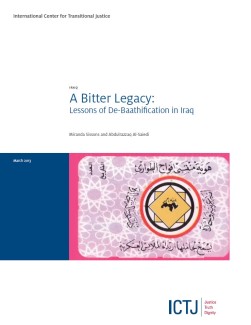
The International Center for Transitional Justice (ICTJ) released a new report today providing detailed information and analysis on how Iraq dismantled Saddam Hussein’s Baath Party and purged state institutions of party members. The report, titled “A Bitter Legacy: Lessons of De-Baathification in Iraq,” carries valuable lessons for countries in the Middle East and North Africa (MENA) as they consider how to deal with legacies of abuse by the security and political apparatuses of former regimes.

Based on significant field research and interviews with the Higher National de-Baathification Commission, this report focuses on Iraq’s purge of members of Saddam Hussein’s Baath Party, which is the most well-known example of large-scale and politically based dismissals in the Middle ...

In this edition of ICTJ's Program report, Kelli Muddell, director of ICTJ's Gender Justice program, reflects on ICTJ’s vision of gender justice, the challenges facing survivors of sexual and gender-based violence in times of transition, and how ICTJ is working to address inequality in countries like Colombia, Nepal, and Tunisia.

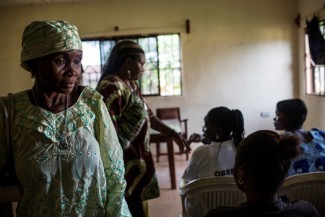
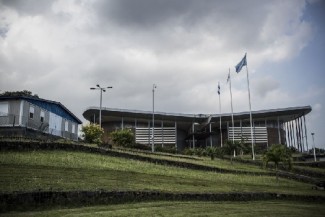
As the Special Court for Sierra Leone wraps up cases against accused war criminals, a conference will be held later this week in Freetown to assess the Court’s work and lasting legacy. The conference is part of a larger international effort to look at how the court has helped to bring peace and establish the rule of law for the people of Sierra Leone, Liberia, and the region as a whole.

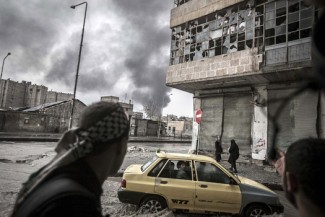
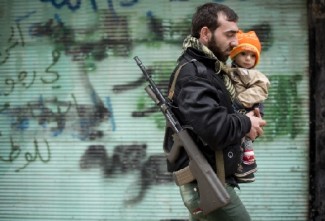
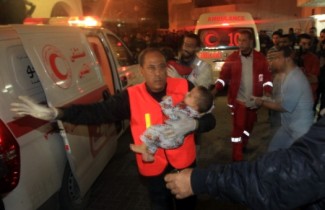
Though the future of President Bashar al-Assad’s regime remains to be seen, some are already planning for the complex aftermath of the regime’s demise. On January 26-27, Syrian activists joined ICTJ and other international experts in Istanbul for two days of discussion on possibilities for transitional justice in Syria.

Recent proposals on using transitional justice as a means of stabilizing Syria in the aftermath of the eventual fall of the Assad regime— including by providing incentives for loyalists to give up a possible ‘fight to the death’ in Damascus — are a significant development in the debate on Syria. As Syrian groups and international actors gathered as “Friends of Syria” consider these proposals, it is of paramount importance to be clear about what is meant by transitional justice.

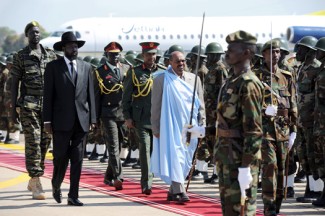
In a major effort to promote accountability for serious crimes in Africa, ICTJ joined hundreds of human rights groups and transitional justice partners to ask the African Union to prioritize justice. Addressed to the new African Union (AU) Chairperson Dr. Nkosazana Dlamini-Zuma, the letter warns that strained relationships between the AU and the International Criminal Court (ICC) may put justice at risk.

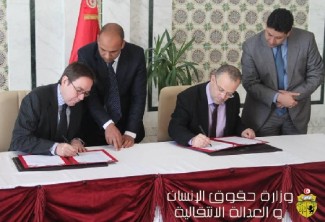
The International Center for Transitional Justice (ICTJ) signed a cooperation agreement with the Tunisian government on January 16 to provide further technical assistance in establishing transitional justice mechanisms in the country. The development comes two years after protests forced President Zine El Abidine Ben Ali to step down and flee the country in January 2011.

The International Center for Transitional Justice and the Special Court for Sierra Leone, with support from the Government of Canada, are pleased to announce "Exploring the Legacy of the Special Court for Sierra Leone," an expert conference in Freetown, 6-7 February, 2013.

The United Nations has proclaimed December 10 as International Human Rights Day. The date commemorates the signing of the Universal Declaration of Human Rights in 1948, which represented the reaction of the international community to the horrors of the Second World War. Today is a day for reflection more than celebration. A cursory scan of events from the last few weeks has thrown up examples that demonstrate that the belief in human rights for all - in treating all states the same - is more of a tissue-thin membrane than a robust bulwark.