

273 results
Eastern DRC continues to be affected by conflict and serious crimes continue to be committed against civilians living in the area by the national army (FARDC), national armed groups, and foreign armed forces. Holding perpetrators accountable is essential to dismantling the structures that allow the ongoing cycle of abuses to continue in the DRC.
The International Center for Transitional Justice (ICTJ) and the Barcelona International Peace Resource Center (BIPRC) are pleased to announce an Intensive Course on Transitional Justice and Peace Processes, taking place in Barcelona, Spain, June 6 - 10, 2016. It will focus on practical examples of recent or paradigmatic peace processes where the question of justice formed a significant part of the negotiating context.

The intimacy of violence has left deep scars in Prijedor, Bosnia and Herzegovina. Seemingly overnight, neighbors turned into perpetrators of incomprehensible violence. Today, twenty years since the end of the war, mothers of the disappeared often live next to those who disappeared their...

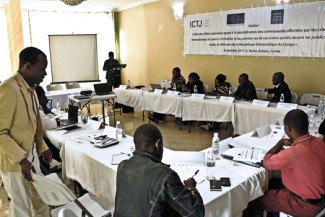
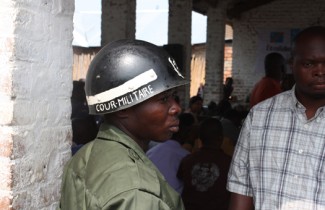
In meeting spaces in Goma, Bukavu, and Bunia, activists and magistrates are discussing ways that they can work together to improve the prosecution of international crimes in the region and address the concerns of local communities.

ICTJ held a series of workshops in Goma, Bukavu, and Bunia, Eastern DRC, from November 13 until November 20 to discuss opportunities for greater interaction and collaboration between civil society and criminal justice officials to advance the prosecution of international crimes in the Congo, in order to better address the concerns of affected communities.
In this op-ed, ICTJ Vice President Paul Seils discusses how education can be used to address legacies of mass violence and dictatorship.
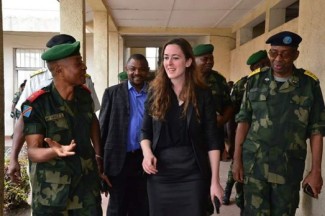
In cooperation with the High Judicial Council, ICTJ held a seminar today with senior representatives of the Congolese military and civilian judiciary and prosecutor’s office to discuss the dual jurisdiction of military and civilian courts over international crimes in the DRC.
In this analysis piece, ICTJ's Cristián Correa expresses concern about a decision by the Inter-American Court of Human Rights leaving room for interpretations that condone the use of methods for combating subversion and terrorism forbidden by international human rights law.

Some of the relatives’ stories start with the banging of a door at night, followed by a sudden abduction; others begin with a seemingly innocent citation to appear at a police station for a “routine procedure”. In any case, the stories always unfold in a desolate manner: as a loved one ...

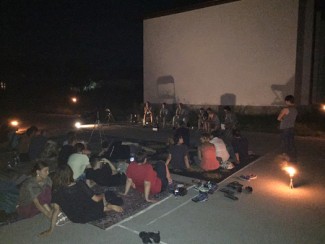
For the last three years, a group of young activists gather on the night of the 5th of August at the site of Trnopolje camp, out in the open, to reenact the way prisoners spent their night and through dialogue explore alternative ways of dealing with the past.