


197 results

Transitional justice, at the core of its mission, strives to “break the ground on a future of peace and stability.” For countries with a violent or repressive past—and this can be said of most—implementing truth-seeking, criminal justice, reparations, and institutional reform measures forms the basis for establishing a culture of justice and respect for the rule of law.

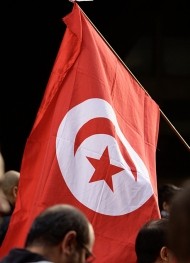
The National Conference to Launch a Dialogue on Transitional Justice in Tunisia was held on Saturday, April 14 in Tunis, initiating a process which should result in the adoption of a comprehensive law on transitional justice by the country’s National Constituent Assembly. ICTJ president David Tolbert delivered a keynote address.

Last month ICTJ, with Saint Joseph University’s Modern Arab World Research Center and UMAM Documentation and Research launched the website “ Badna Naaref” (We Want to Know). This oral history project conducted by students tells the stories of suffering and survival during the war in Lebanon, serving both to commemorate and educate.

Lebanon has yet to seriously address the issue of thousands of people who went missing or were forcibly disappeared during the country’s civil war. ICTJ spoke with Lebanese activists to discuss a recent initiative taken by the families of the missing and civil society organizations to create a draft law on the missing.

A two-day roundtable discussion on a draft law on the missing and forcibly disappeared persons was held February 24–25 in Beirut, Lebanon. Organized by the Committee of the Families of the Kidnapped and Disappeared in Lebanon, Support of Lebanese in Detention and Exile (SOLIDE), Act for the Disappeared, and ICTJ, the roundtable was part of the project “Lebanon’s unaddressed legacy: the missing and the families’ right to know,” funded by the European Union (EU) and the Embassy of Switzerland in Lebanon.

This year’s Annual Emilio Mignone Lecture on Transitional Justice, coordinated by ICTJ and the Center for Human Rights and Global Justice at the NYU School of Law, focused on the intersection between transitional justice and international development.

David Tolbert, President of International Center of Transitional Justice: "I join many others in giving a final salute to Nino Cassese. He was man of extraordinary energy, singular determination and extraordinary intellectual talents but at the same time was an unassuming man, with a ready smile, an engaging anecdote and plenty of self-deprecation. Nino was a driving force behind the field of international criminal justice, not only through his leadership of both the International Criminal Tribunal for the former Yugoslavia (ICTY) and the Special Tribunal for Lebanon (STL) but through his unstinting writing and advocating on this most crucial of subjects."

The International Criminal Court (ICC) must better communicate what is driving its actions to the public of the Middle East and North Africa (MENA) and elsewhere around the world if it is to develop confidence in its capacity to act as a guardian of international criminal law.

This journal article examines challenges to the legitimacy of the Special Tribunal for Lebanon (STL). These challenges include selective impunity, the highly selective nature of the jurisdiction of the STL, and the fears that the STL itself will act as an instrument for foreign powers...

ICTJ’s Middle East and North Africa Program, in partnership with the Arab Institute for Human Rights, the Tunisian League for Human Rights, and the Office of the High Commissioner for Human Rights, convened an international conference entitled “Addressing the Past, Building the Future...