

421 results

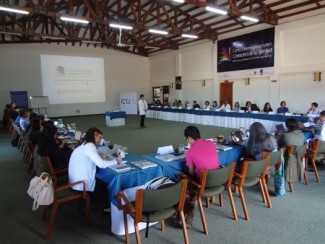
Nearly a decade after Colombia’s first transitional justice mechanisms were created, the country is now weighing options for the establishment of an official truth commission. To examine and inform these options, the International Center for Transitional Justice is hosting the International Course on Truth Commissions from March 11-15, 2013, in Villa de Leyva, Colombia. The course will be modeled after ICTJ’s international Intensive Course on Truth Commissions, which has been held for five consecutive years.

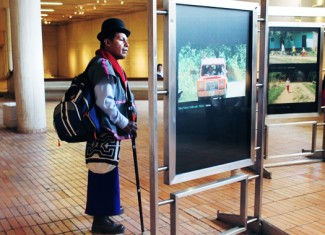
From February 27-March 1, leading indigenous rights activists from around the world will join their counterparts and other experts at Columbia University to discuss access to truth, justice, and reconciliation for indigenous peoples.

In this edition of ICTJ's Program report, Kelli Muddell, director of ICTJ's Gender Justice program, reflects on ICTJ’s vision of gender justice, the challenges facing survivors of sexual and gender-based violence in times of transition, and how ICTJ is working to address inequality in countries like Colombia, Nepal, and Tunisia.

ICTJ calls on the Prime Minister of the Solomon Islands to make the report of the Solomon Islands Truth and Reconciliation Commission public without delay. Almost one year since the TRC handed its final report to the prime minister, it has still not been publicly released, contrary to the law that established the commission.

Indigenous rights are increasingly being addressed through different transitional justice measures, and ICTJ is actively involved in the discourse on how truth commissions and other transitional justice mechanisms can help the struggle for the rights of indigenous people.

As attested by the arrest on January 3, 2013 in the United Kingdom of Kumar Lama, a Nepali Army Colonel suspected of torture, the government of Nepal’s failure to pursue truth and accountability for conflict-era violations can have serious consequences. Rather than resisting UK efforts to implement its obligations under international law, the Nepali government should develop a full transitional justice programme and redouble its efforts to provide truth, justice and reparations inside the country.

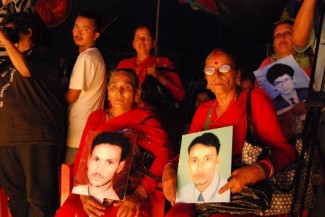
Six years after the conflict ended, the government of Nepal has failed to initiate a comprehensive investigation into the past. As a result, it has failed to uphold the rights of victims and Nepali society to know the truth about abuses. Inaction is particularly cruel regarding the relatives of the disappeared, for whom lack of information on the fate and whereabouts of their loved ones equates to permanent anguish and extreme suffering.

This briefing paper sets out the obligations of the state and international best practice with respect to the right to truth, both as a key element of a transitional justice strategy and as a critical component of providing effective remedy to victims of gross violations of human righ...

On Monday, December 10, the International Center for Transitional Justice will help tell the stories of victims and human rights activists at the forefront of the struggle for human rights across the globe. Send us images and texts that portray efforts seeking accountability, truth, remembrance, and redress in your community: we will share them on ICTJ’s Facebook page, and feature a selection of these stories on our website.

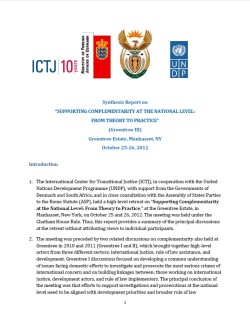
The International Center for Transitional Justice (ICTJ), in cooperation with the United Nations Development Programme (UNDP), with support from the Governments of Denmark and South Africa, and in close consultation with the Assembly of States Parties to the Rome Statute (ASP), held a...