


213 results

This briefing paper calls on the soon-to-be-established NLD-led Burmese government to seriously consider taking steps to deal with Myanmar’s troubled past as a way to help end the cycle of violence and human rights violations in the conflict-torn country.

In this op-ed, ICTJ's Aileen Thomson and Bo Kyi argue that in the wake of Myanmar's historic elections, the release of all political prisoners held by the government would be an important step towards national reconciliation.

ICTJ welcomes the recent agreement announced by the Government of Colombia and the Revolutionary Armed Forces of Colombia (FARC) to commit to immediately implement measures to search for, locate, and identify those who have disappeared during the 50-year armed conflict and – if a final peace agreement is reached – to create a special unit dedicated to these tasks.

A complex law and ongoing violence are complicating efforts by the Colombian government to provide reparations to millions of victims of the country’s internal armed conflict, according to a new report by ICTJ.

This report examines Colombia’s Victims and Land Restitution Law (2011), which provides comprehensive reparations to conflict victims and restitution to victims of forced displacement who rely on land for their livelihoods – and assesses the challenges of implementing the law under cu...

The International Center for Transitional Justice welcomes the recent agreement between the Government of Colombia and the Revolutionary Armed Forces of Colombia to create a special criminal jurisdiction as part of an integrated system of truth, justice, reparations and guarantees of non-recurrence.

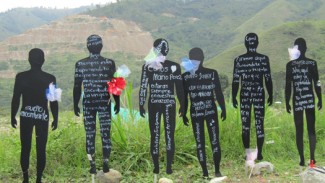
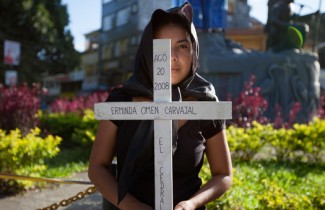
Some of the relatives’ stories start with the banging of a door at night, followed by a sudden abduction; others begin with a seemingly innocent citation to appear at a police station for a “routine procedure”. In any case, the stories always unfold in a desolate manner: as a loved one ...

ICTJ welcomes the agreement reached between the Colombian government and the Revolutionary Armed Forces of Colombia (FARC) guerrilla group to create a truth commission, after a peace agreement is signed.

In the wake of the agreement between Colombia and FARC to form a truth commission, ICTJ's Fernando Travesí and Félix Reátegui discuss the role such a body should be expected to fulfill.

In this op-ed, ICTJ Vice President Paul Seils questions the policy objectives of punishing members of FARC accused of the most serious crimes in the ongoing Colombian peace negotiations.