511 results

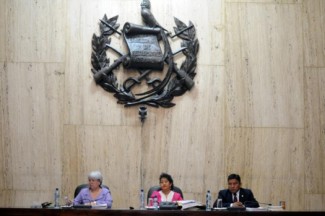
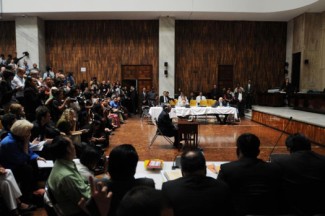
The International Center for Transitional Justice (ICTJ) welcomes today’s verdict in Guatemala by the High Risk Court in the trial of former military dictator José Efrain Ríos Montt. The 86-year-old ex-general was convicted of genocide and crimes against humanity against the indigenous Mayan Ixil population during Guatemala’s Civil War. He was sentenced to a total of 80 years in prison. José Mauricio Rodríguez Sánchez, the co-accused, who headed military intelligence under Ríos Montt, was found innocent.

Nine international human rights and legal groups have welcomed the resumption of the Guatemalan trial of Efraín Ríos Montt, the former military dictator, for genocide and crimes against humanity. The trial has taken another step towards its conclusion with the hearing of final arguments from the prosecution and victims’ representatives today and yesterday.

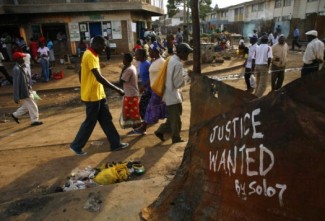
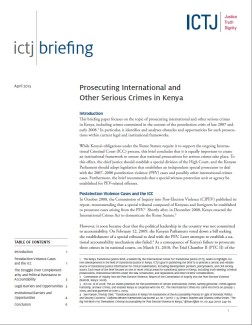
ICTJ released a briefing paper today examining current opportunities for prosecuting serious crimes within Kenya’s national judicial system, including crimes committed during the postelection violence of late 2007 and early 2008 (PEV), which claimed 1,113 lives and displaced an estimated 660,000 people. Titled “Prosecuting International and Other Serious Crimes in Kenya,” the paper looks at legal and institutional reforms that may be needed at the national level to effectively investigate and prosecute the worst crimes of the PEV period, including murder, serious assault, and rape.

This briefing paper focuses on the topic of prosecuting international and other serious crimes in Kenya, including crimes committed in the context of the postelection crisis of late 2007 and early 2008. In particular, it identifies and analyzes obstacles and opportunities for such pro...

South African judge and human rights activist Albie Sachs is among the foremost transitional justice experts to have emerged from the anti-apartheid struggle and subsequent transition. In this interview with ICTJ Vice President Paul Seils, Sachs discusses the difficult balance of retribution and reconciliation, and offers possible lessons from the South African experience for other societies facing similar questions of truth and justice.

Four international legal and human rights groups are together urging all concerned to ensure that the current trial in Guatemala of former president Efrain Rios Montt on charges of genocide and crimes against humanity proceeds with due respect for judicial independence. The four are: the Open Society Justice Initiative, the International Center for Transitional Justice (ICTJ), the Center for Justice and International Law (CEJIL), and the Washington Office on Latin America (WOLA).

On April 10, the UN General Assembly is holding a thematic debate on the role of international justice in reconciliation processes. The debate was called by UN GA President Vuk Jeremic, of Serbia, in the wake of the recent acquittal of Croatian General Ante Gotovina by the International Criminal Tribunal for the Former Yugoslavia. Unfortunately, it has become clear that the real purpose of this debate is directed at undermining the ICTY, rather than to discuss an important issue, not only in the Balkans, but in a growing number of countries.

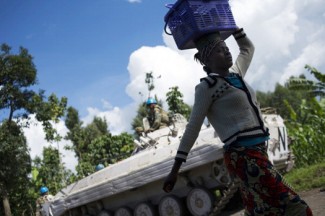
In this opinion piece, ICTJ's Sharanjeet Parmar asks: why do international efforts to tackle impunity for sexual violence in the DRC continue to miss the mark? High-level diplomatic visits are important in underscoring the responses needed for sexual violence survivors. However, without a strong political commitment from top Congolese authorities to address rampant impunity for sexual violence, no amount of attention or media coverage will reduce the violence or put an end to the cycles of suffering.

In this op-ed, ICTJ's Marcie Mersky argues that the significance of the genocide trial for José Efraín Ríos Montt stretches far beyond Guatemala: it is the first time that a former head of state is being tried for genocide in a credible national court, by the national authorities, in the country where the alleged crimes took place.

This opinion piece by Eduardo González, director of the Truth and Memory program at ICTJ, asks: can you build a solid, legitimate democracy on the sands of silence, or does truth provide a more trustful foundation?