
380 results

This report focuses on “indirect victims” of human rights violations in Tunisia, namely, the wives, sisters, and children of political prisoners in Tunisia, who suffered discrimination, social exclusion, police violence, and harassment during the dictatorship. Presenting documentation...

On Friday, October 19, ICTJ welcomed the Special Rapporteur on the Human Rights of Internally Displaced Persons (IDPs), Ms. Cecilia Jimenez-Damary, at its headquarters in New York, where she gave an informal presentation. Jimenez-Damary’s eye-opening report on the human rights of IDPs takes up the crucial importance of including the voices and concerns of IDPs in transitional justice mechanisms.

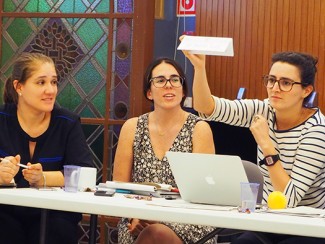
From October 1 to October 5, 2018, ICTJ hosted its eleventh intensive course on transitional justice in collaboration with the International Peace Center for in Barcelona. Participants included leaders in their respective fields, including human rights law, community justice and legal services, peacebuilding, education, and humanitarian affairs.

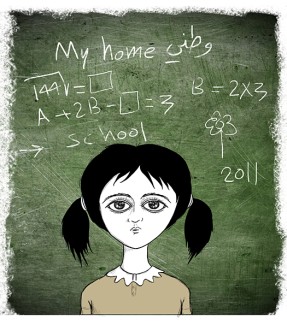
Diala Brisly and Hani Abbas, two cartoonists and contemporaries, know firsthand the power of images to document conflict, and of cartoons —consumed by children and adults alike —to promote action.

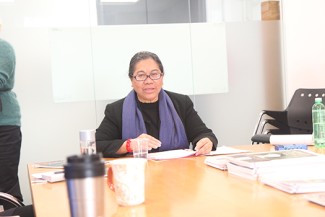
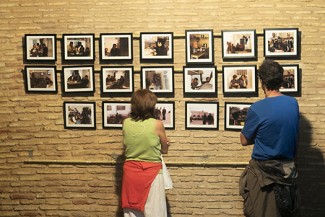
Tunis, September 24, 2018—The International Center for Transitional Justice and the University of Birmingham launched Voices of Memory, an interactive exhibition inspired by a collective of nine Tunisian women from across the country and from different generations. The exhibition is the first collective testimonial of Tunisian women who experienced human rights abuses under the Ben Ali regime.

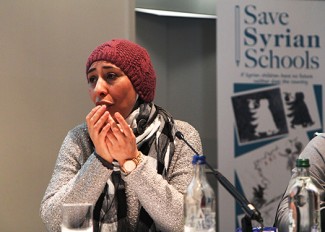
This report examines attacks on schools in Syria from multiple angles: from the legal implications of such attacks to the everyday impact on students, teachers, families, and society at large. It is the product of Save Syrian Schools, a collaborative project led by...

A new report on attacks on schools in Syria harnesses documentation to call attention to atrocities and advance storytelling, truth seeking, acknowledgment. It is the product of Save Syrian Schools, a collaborative project led by 10 Syrian civil society organizations and the ICTJ that demands an end to the killing of Syrian children and justice for the bombing of schools.

Enforced disappearances continue to affect hundreds of thousands of people around the world. The hopes of Sri Lankan victims reached a peak in 2015, when President Maithripala Sirisena was elected on a centrist platform and a commitment to truth, justice, and reconciliation. Later that year, the Sri Lankan government agreed to a UN Human Rights Council resolution that offered a roadmap for the search for the missing and forcibly disappeared. To the dismay of many, however, the government has done little since to implement these commitments and to take the opinions of victims seriously.

Life continues to stand still for the many families of the missing and disappeared in Lebanon. The Lebanese War ended 28 years ago, but for these families the war rages on. A recent legislative breakthrough, however, might finally pave the way for Lebanon to confront this legacy.

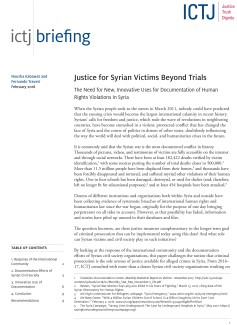
By looking at the documentation efforts of Syrian civil society organizations, this paper challenges the notion that criminal prosecution is the sole avenue of justice available for alleged crimes in Syria. Documentation could be used for important other avenues of justice, such as ac...