


433 results

A two-day roundtable discussion on a draft law on the missing and forcibly disappeared persons was held February 24–25 in Beirut, Lebanon. Organized by the Committee of the Families of the Kidnapped and Disappeared in Lebanon, Support of Lebanese in Detention and Exile (SOLIDE), Act for the Disappeared, and ICTJ, the roundtable was part of the project “Lebanon’s unaddressed legacy: the missing and the families’ right to know,” funded by the European Union (EU) and the Embassy of Switzerland in Lebanon.

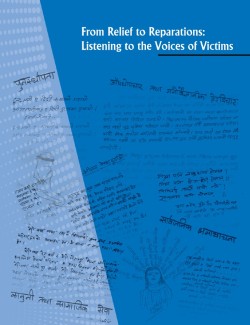
Based on interviews with 1,200 people, this study assesses conflict victims' experience with the government's Interim Relief Program since its inception in 2008. The findings are intended to inform a future reparations policy that would seek to help those whose human rights were viola...

As Nepal’s parliament enters the final discussions on a draft Truth and Reconciliation Commission (TRC) bill, questions remain regarding the relationship between amnesty and reconciliation provisions within the bill.

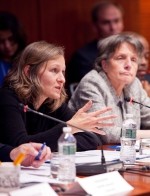
As ICTJ co-hosts a discussion on complementarity on the margins of the Assembly of State Parties (ASP) of the International Criminal Court (ICC), the principle of ensuring accountability for serious crimes has seen a major breakthrough at a recent high-level meeting at Greentree. The meeting brought together international justice actors, development practitioners, UN representatives, and national rule of law actors to discuss the practical implementation of complementarity and how to strengthen domestic systems seeking to investigate serious crimes.

NEW YORK, Dec. 14, 2011—ICTJ welcomes the election of Fatou Bensouda of Gambia as the next prosecutor of the International Criminal Court (ICC). Ms. Bensouda was unanimously elected December 12 by the Assembly of States Parties (ASP) during its 10th session in New York City, and will be the court's second prosecutor, commencing in June 2012.

During peace negotiations, there is often a belief that providing amnesties for certain crimes will help promote national reconciliation. Nepal's Truth and Reconciliation Commission (TRC) Bill currently contains provisions on both amnesty and reconciliation. However, the Bill itself i...

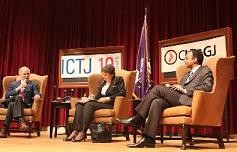
This year’s Annual Emilio Mignone Lecture on Transitional Justice, coordinated by ICTJ and the Center for Human Rights and Global Justice at the NYU School of Law, focused on the intersection between transitional justice and international development.

JAKARTA, Nov. 15, 2011—Experts and stakeholders from Cambodia, the Philippines, Bangladesh, Indonesia, Burma, Timor-Leste, Thailand, and Nepal, along with international experts are gathering in Jakarta’s Hotel Atlet from November 15–16 to discuss the need for progress on prosecuting serious crimes in Asia.

View the live broadcast of tonight's Annual Emilio Mignone Lecture on Transitional Justice, from 6:00pm–7:40pm. Try Ustream's free video streaming desktop app

David Tolbert, President of International Center of Transitional Justice: "I join many others in giving a final salute to Nino Cassese. He was man of extraordinary energy, singular determination and extraordinary intellectual talents but at the same time was an unassuming man, with a ready smile, an engaging anecdote and plenty of self-deprecation. Nino was a driving force behind the field of international criminal justice, not only through his leadership of both the International Criminal Tribunal for the former Yugoslavia (ICTY) and the Special Tribunal for Lebanon (STL) but through his unstinting writing and advocating on this most crucial of subjects."