
420 results

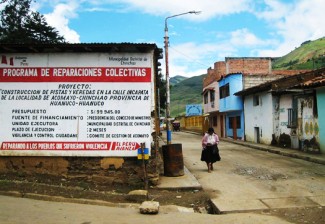
Reparations seek to recognize and address the harms suffered by victims of systematic human rights violations. ICTJ’s Reparative Justice program provides knowledge and comparative experience on reparations to victims' groups, civil society and policymakers worldwide. In this edition of the ICTJ Program Report, we look at ICTJ's work on reparations in dynamic transitional contexts such as Nepal, Colombia, Peru, DRC, and Uganda.

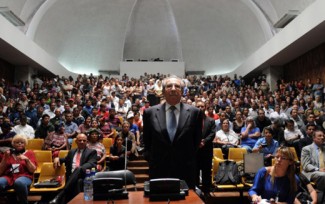
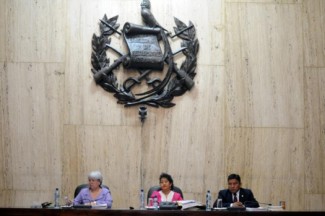
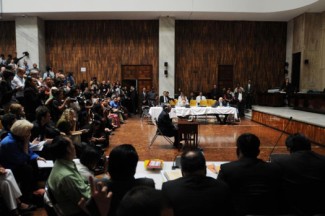
The International Center for Transitional Justice (ICTJ) welcomes today’s verdict in Guatemala by the High Risk Court in the trial of former military dictator José Efrain Ríos Montt. The 86-year-old ex-general was convicted of genocide and crimes against humanity against the indigenous Mayan Ixil population during Guatemala’s Civil War. He was sentenced to a total of 80 years in prison. José Mauricio Rodríguez Sánchez, the co-accused, who headed military intelligence under Ríos Montt, was found innocent.

Nine international human rights and legal groups have welcomed the resumption of the Guatemalan trial of Efraín Ríos Montt, the former military dictator, for genocide and crimes against humanity. The trial has taken another step towards its conclusion with the hearing of final arguments from the prosecution and victims’ representatives today and yesterday.

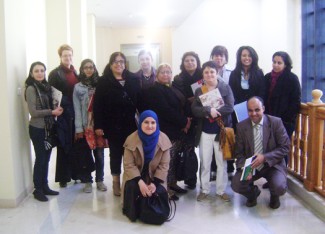
An ICTJ immersion course brought together women from Egypt, Yemen, Syria, and Libya to closely observe Tunisia’s emerging experience in transitional justice, including the ways in which issues of gender-based violence and the experiences of women are being addressed.

Four international legal and human rights groups are together urging all concerned to ensure that the current trial in Guatemala of former president Efrain Rios Montt on charges of genocide and crimes against humanity proceeds with due respect for judicial independence. The four are: the Open Society Justice Initiative, the International Center for Transitional Justice (ICTJ), the Center for Justice and International Law (CEJIL), and the Washington Office on Latin America (WOLA).

Despite the overwhelming percentage of Lebanese who were affected by recent wars and political unrest, discussion of Lebanon’s past is largely absent from public spheres. A new documentary follows youth in Lebanon as they set out to find the truth.

In this op-ed, ICTJ's Marcie Mersky argues that the significance of the genocide trial for José Efraín Ríos Montt stretches far beyond Guatemala: it is the first time that a former head of state is being tried for genocide in a credible national court, by the national authorities, in the country where the alleged crimes took place.

In our work providing assistance to societies around the world, we draw continual inspiration from individuals and communities who refuse to ignore the abuses of the past, and who often face great obstacles to expose it. To honor their courage, we invite you to read a selection of perspectives on truth and dignity from those who have used their words to convey a powerful idea: truth is the foundation of justice.

This year, ICTJ's campaign for the International Day for the Right to the Truth centers around the theme, “Truth is the Foundation of Justice.” This notion, fundamental to the idea of a comprehensive approach to justice, is explored through several new releases from ICTJ.

March 21, 2013, New York, NY- The International Center for Transitional Justice (ICTJ) is launching a global awareness campaign for the International Day for the Right to the Truth, March 24, to affirm the right of victims to know the truth about human rights violations. Under the slogan, “Truth is the foundation of justice,” ICTJ’s campaign will highlight the important role that truth commissions can play in societies dealing with a legacy of violence and repression.