
535 results

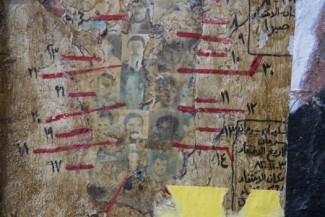
This year, to mark the International Day of the Disappeared, we bring the story of Ziad and Ghassan Halwani, two brothers in Lebanon whose father was kidnapped and disappeared when they were young. Their story is a powerful testament to the long-term impact of disappearances on the life course of those who are still growing up.

On August 7, the Extraordinary Chambers in the Courts of Cambodia (ECCC) found two senior leaders of the Khmer Rouge, Nuon Chea and Khieu Samphan, guilty of crimes against humanity. For many victims who have been waiting for 35 years, the judgment still felt like bittersweet justice.

Growing up in Ras el Nabeh, a lively neighborhood in the heart of Beirut, was tough and dangerous in the early 1980s, as it was part of the Green Line –a maze of abandoned streets inhabited by weeds turned into a frontline that vertically divided Christian East Beirut from Muslim West B...

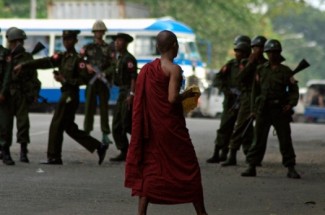
Continuing political repression, cronyism, and ongoing conflicts are disrupting attempts to put Myanmar on a linear path to democracy, peace, and development, says a new report from the ICTJ. According to the report, titled “Navigating Paths to Justice in Myanmar’s Transition,” dealing with current and historical abuses is essential to achieving genuine progress on peacebuilding and economic development in the country.

This report asserts that dealing with past abuses in Myanmar is essential to achieving genuine progress on peacebuilding and economic development in the country. Conflict and high levels of political repression have racked Myanmar for more than half a century. Both President Thein Sei...

In this op-ed, ICTJ Vice President Paul Seils argues that the front line of justice must always be national courts and justice systems. "Citizens must see social institutions at work in their home countries, as it is there that courts can repudiate wrongdoing and reaffirm the most fundamental elements of the contract that binds a society together. It is there that having the dignity of a citizen can have its fullest meaning," writes Seils on International Justice Day.

The recent re-election of Colombia’s president, Juan Manuel Santos, brings hope to a country seeking to end a half-century of conflict. But, as with so many peace processes, finding a balance between creating a stable accord and acknowledging the terrible injustices that occurred during the conflict can be difficult to achieve.

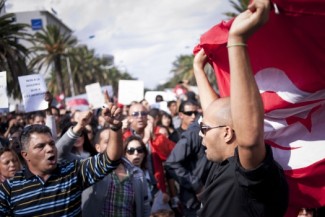
Tunisia has faced many challenges since the launch of the National Dialogue on Transitional Justice two years ago, including political assassinations that rocked the process as well as a number of political blockages. Yet the Tunisian people came through a complex and challenging process and achieved important results — results that can provide the foundation to confront a long legacy of human rights abuses and pave the way towards a democratic transition built on the rule of law and trust between citizens and the state.

During Nepal's armed conflict, more than 13,000 people were killed and 1,300 forcibly disappeared. Today, a new government has voted to create a Truth and Reconciliation Commission, as well as a Commission of Inquiry on the Disappearance of Persons. Many victims have protested the flaws in the proposals; meanwhile, no comprehensive reparations have been provided for those left most vulnerable by conflict. In this interview with ICTJ's Santosh Sigdel, we discuss developments related to ICTJ's work in Nepal.

Truth commissions can make important contributions to peace processes if all parties can agree on common objectives and there is genuine local political will to shed light on past events. This is the key finding of a new study – titled “Challenging the Conventional: Can Truth Commissions Strengthen Peace Processes?” – to be released on 19 June 2014 by ICTJ and the Kofi Annan Foundation.