
674 results

ICTJ joins other international and national human rights groups from across the global calling for Egypt to protect the independence of non-governmental organizations.

This year, to mark the International Day of the Disappeared, we bring the story of Ziad and Ghassan Halwani, two brothers in Lebanon whose father was kidnapped and disappeared when they were young. Their story is a powerful testament to the long-term impact of disappearances on the life course of those who are still growing up.

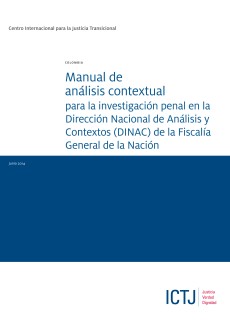
This manual was developed within the Framework Agreement for Cooperation between the International Center for Transitional Justice (ICTJ) and the Attorney General's Office in Colombia. This agreement was signed to provide technical assistance to the National Analysis and Context Unit ...

Growing up in Ras el Nabeh, a lively neighborhood in the heart of Beirut, was tough and dangerous in the early 1980s, as it was part of the Green Line –a maze of abandoned streets inhabited by weeds turned into a frontline that vertically divided Christian East Beirut from Muslim West B...

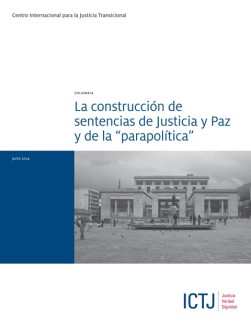
This report is the result of research conducted by consultant Olga Lucía Gaitán for the International Center for International Justice (ICTJ) to analyze the rulings handed down by the Justice and Peace Chambers and the Criminal Chamber of the Supreme Court of Justice in Colombia. The ...

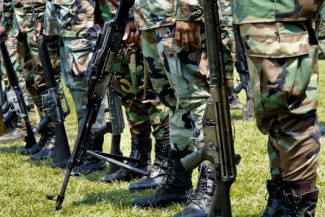
By this summer, dozens of paramilitaries and guerrillas in Colombia's Justice and Peace process will have already spent eight years in prison. In accordance with the law, those who fulfill their obligations to contribute to the truth and provide reparation to victims should be released after serving eight years. In this op-ed, ICTJ's Maria Camila Moreno analyzes the valuable lessons learned through this process.

In this op-ed, ICTJ Vice President Paul Seils argues that the front line of justice must always be national courts and justice systems. "Citizens must see social institutions at work in their home countries, as it is there that courts can repudiate wrongdoing and reaffirm the most fundamental elements of the contract that binds a society together. It is there that having the dignity of a citizen can have its fullest meaning," writes Seils on International Justice Day.

On International Criminal Justice Day, 2014, ICTJ joins the global celebrations marking the groundbreaking establishment of the Rome Statute in 1998, which created the International Criminal Court (ICC). To mark the day, we review five contexts where national systems proved it was possible to bring perpetrators to justice where it matters the most.

The recent re-election of Colombia’s president, Juan Manuel Santos, brings hope to a country seeking to end a half-century of conflict. But, as with so many peace processes, finding a balance between creating a stable accord and acknowledging the terrible injustices that occurred during the conflict can be difficult to achieve.

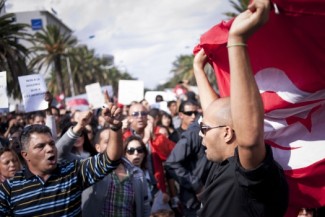
Tunisia has faced many challenges since the launch of the National Dialogue on Transitional Justice two years ago, including political assassinations that rocked the process as well as a number of political blockages. Yet the Tunisian people came through a complex and challenging process and achieved important results — results that can provide the foundation to confront a long legacy of human rights abuses and pave the way towards a democratic transition built on the rule of law and trust between citizens and the state.