738 results

Morocco’s “Years of Lead” period was marked by policies of state violence against political dissidents including torture, arbitrary detention, and enforced disappearances. “ Morocco: Gender and the Transitional Justice Process” analyzes whether the various transitional justice processes undertaken by the IER sufficiently fulfill the gender-specific focus of its mandate.

ICTJ hosted its third Intensive Course, Truth-seeking and the Challenge of Sustainable Peace, on September 26–30. Based on concrete field experience, the participants explored the relationship between truth-seeking and peace in societies that have experienced or are still experiencing armed conflict.

As ICTJ celebrates ten years of existence and contribution to the development of the field of transitional justice, we are poised for a future of continued engagement with partners and communities seeking to overcome legacies of mass violence and repression. Ten years on, we now work in a world increasingly aware of the of the costs of failing to systematically transition from conflict and human rights abuse to the rule of law and equal rights for all citizens, and on the other hand, of the increasing complexity of doing so.
The Kenya Transitional Justice Brief, a quarterly bulletin by ICTJ highlighting current developments in the field of transitional justice in Kenya. This brief focuses on the process of implementing the 2010 constitution and the political context in which this takes place, providing a ...

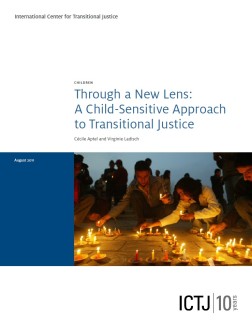
“Through a New Lens: A Child-Sensitive Approach to Transitional Justice” analyzes experiences of four countries—Liberia, Democratic Republic of Congo (DRC), Colombia and Nepal—and identifies some key lessons on children’s participation in transitional justice measures. Authored by Céc...

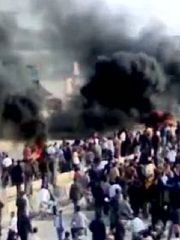
As the international community considers its response to the surging violence in Syria, those responsible for gross human rights violations in the country should be held to account, said the International Center for Transitional Justice (ICTJ) today.

The appearance of Hosni Mubarak in the opening of his trial this week reassured millions of Egyptians that their revolutionary struggle was not in vain. But the truth about Mubarak’s ability to participate in his trial is still unclear. With the public doubting the court’s seriousness, Mubarak’s appearance could have been a political decision aimed at boosting confidence. If this is the case, the judiciary risks appearing politicized in the eyes of Egyptians.

ICTJ is pleased to present the KickStarter campaign to launch the Iriba Center for Multimedia Heritage in Kigali, Rwanda. The Iriba Center, whose name means “the source,” is a project to make accessible an audiovisual history of Rwanda, to “keep the country’s history alive.”

Almost a year after the second post-election transition in Burundi, national and international attention is focused on the willingness and ability of the new government to implement the decisions agreed to during negotiations that culminated in the historic August 2000 peace and recon...

ICTJ filed an amicus brief in the apartheid reparations case before the Southern District Court of New York on November 25, 2009. The brief supports a decision by the South African Government not to oppose legal action against five international companies that are accused of aiding an...