

738 results

This report focuses on “indirect victims” of human rights violations in Tunisia, namely, the wives, sisters, and children of political prisoners in Tunisia, who suffered discrimination, social exclusion, police violence, and harassment during the dictatorship. Presenting documentation...

On Friday, October 19, ICTJ welcomed the Special Rapporteur on the Human Rights of Internally Displaced Persons (IDPs), Ms. Cecilia Jimenez-Damary, at its headquarters in New York, where she gave an informal presentation. Jimenez-Damary’s eye-opening report on the human rights of IDPs takes up the crucial importance of including the voices and concerns of IDPs in transitional justice mechanisms.

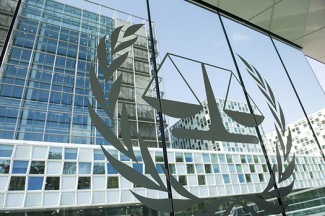
On September 18, the trial of Dominic Ongwen resumed at the ICC. Ongwen is on trial for 70 counts of war crimes and crimes against humanity – including various forms of sexual violence and the recruitment of child soldiers – committed in the former IDP camps of Lukodi, Odek, Abok, and Pajule during the 20-year insurgency in Northern Uganda. Ongwen is the first former child soldier who is facing trial at the ICC for crimes in which he was also a victim.

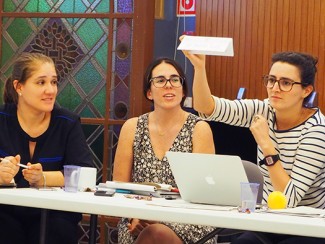
From October 1 to October 5, 2018, ICTJ hosted its eleventh intensive course on transitional justice in collaboration with the International Peace Center for in Barcelona. Participants included leaders in their respective fields, including human rights law, community justice and legal services, peacebuilding, education, and humanitarian affairs.

Diala Brisly and Hani Abbas, two cartoonists and contemporaries, know firsthand the power of images to document conflict, and of cartoons —consumed by children and adults alike —to promote action.

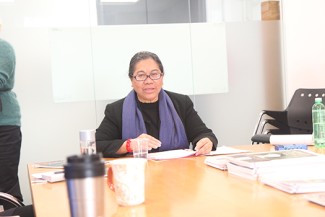
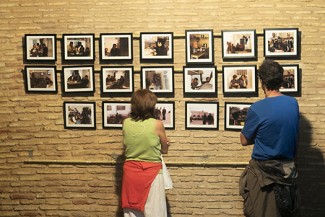
Tunis, September 24, 2018—The International Center for Transitional Justice and the University of Birmingham launched Voices of Memory, an interactive exhibition inspired by a collective of nine Tunisian women from across the country and from different generations. The exhibition is the first collective testimonial of Tunisian women who experienced human rights abuses under the Ben Ali regime.

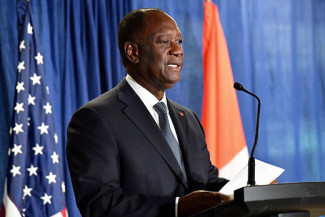
On the eve of Côte d'Ivoire’s 58th independence anniversary, in a dubious attempt at “social cohesion,” President Alassane Ouattara granted amnesty to 800 persons accused or convicted of crimes against the state during the post-election crisis of 2010-2011. Former First Lady Simone Gbagbo — who had been tried for undermining state security — and other high-ranking officials associated with former President Laurent Gbagbo’s party, the Ivorian Popular Front (FPI), were among those released. The lapses in accountability and acknowledgment in Cote d’Ivoire have emboldened perpetrators and made it impossible for many victims to move on with their lives. The challenges of transitional justice processes present clear obstacles to the sustainable peace that the people of Cote d’Ivoire have been working toward.

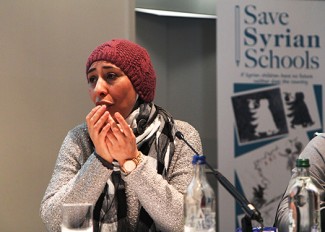
This report examines attacks on schools in Syria from multiple angles: from the legal implications of such attacks to the everyday impact on students, teachers, families, and society at large. It is the product of Save Syrian Schools, a collaborative project led by...

A new report on attacks on schools in Syria harnesses documentation to call attention to atrocities and advance storytelling, truth seeking, acknowledgment. It is the product of Save Syrian Schools, a collaborative project led by 10 Syrian civil society organizations and the ICTJ that demands an end to the killing of Syrian children and justice for the bombing of schools.

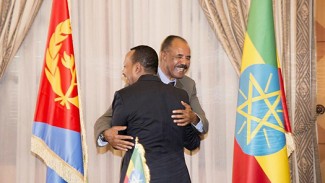
The announcement by the Executive Committee of Ethiopia’s ruling party that the country will implement the 2002 Algiers peace agreement and decisions of the Ethiopia-Eritrea Boundary Commission brings hope that a 20-year war that divided families and communities is finally over.