



526 results

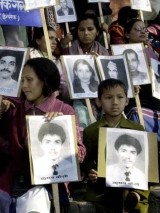
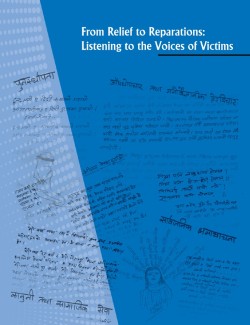
Five years since the end of Nepal's brutal civil war, victims are losing patience waiting for truth, justice, and reparation. Last year ICTJ completed a six month research project to analyze the effects of the the government's Interim Relief Program and determine the steps still required for Nepal to fulfill its obligation to provide reparations to victims. The findings have been published in a report titled “ From Relief to Reparations: Listening to the Voices of Victims.”

Last week's decision by the International Criminal Court (ICC) in The Hague confirming four Kenyans must answer to charges of crimes against humanity does not excuse their government from responsibility to pursue justice at home, writes ICTJ vice president Paul Seils.

The decision of the International Criminal Court (ICC) confirming charges of crimes against humanity against William Ruto, Joshua Sang, Francis Muthaura, and Uhuru Kenyatta, and declining to confirm charges against Henry Kosgey and Mohammed Ali is a reminder that the vast majority of victims have still not seen justice done, the International Center for Transitional Justice (ICTJ) said.

Ambassador Bethuel Kiplagat’s recent attempt to return to the Truth, Justice and Reconciliation Commission (TJRC)—pending resolution of serious allegations implicating him in acts connected to human rights violations and corruption—threatens the viability and credibility of the TJRC process, ICTJ said.

Based on interviews with 1,200 people, this study assesses conflict victims' experience with the government's Interim Relief Program since its inception in 2008. The findings are intended to inform a future reparations policy that would seek to help those whose human rights were viola...

During a thematic hearing December 13–14, Kenya's Truth, Justice and Reconciliation Commission (TJRC) heard testimonies from children on their own experiences as part of the commission's investigation into gross human rights violations and historical injustices in the country between 1963 and 2008.

As Nepal’s parliament enters the final discussions on a draft Truth and Reconciliation Commission (TRC) bill, questions remain regarding the relationship between amnesty and reconciliation provisions within the bill.

As ICTJ co-hosts a discussion on complementarity on the margins of the Assembly of State Parties (ASP) of the International Criminal Court (ICC), the principle of ensuring accountability for serious crimes has seen a major breakthrough at a recent high-level meeting at Greentree. The meeting brought together international justice actors, development practitioners, UN representatives, and national rule of law actors to discuss the practical implementation of complementarity and how to strengthen domestic systems seeking to investigate serious crimes.

NEW YORK, Dec. 14, 2011—ICTJ welcomes the election of Fatou Bensouda of Gambia as the next prosecutor of the International Criminal Court (ICC). Ms. Bensouda was unanimously elected December 12 by the Assembly of States Parties (ASP) during its 10th session in New York City, and will be the court's second prosecutor, commencing in June 2012.

During peace negotiations, there is often a belief that providing amnesties for certain crimes will help promote national reconciliation. Nepal's Truth and Reconciliation Commission (TRC) Bill currently contains provisions on both amnesty and reconciliation. However, the Bill itself i...