


757 results

To mark 15 years of ICTJ, we asked staff past and present for memories that stand out to them - moments that throw the stakes of our work into sharp relief and resonate with them years later. Olivier Kambala wa Kambala, an ICTJ Program Associate from 2005 to 2010, talks about the thirst for justice he saw on a visit to Guinea, and how the political situation rendered quenching it impossible.

South Africa Parliament faces a historic moment. In this op-ed, ICTJ's Vice President Paul Seils remembers the great hope that marked the ICC’s emergence: "No country embodied that hope and that reality more powerfully and more inspiringly than South Africa."

For years the Lord’s Resistance Army (LRA) captured thousands of young girls in northern Uganda, forcing them to be not only soldiers, but wives and mothers too. When these women finally escaped their captors, children in tow, they hoped to be welcomed back into their com...

The Africa Union's resolution to collectively support a strategy to withdraw from the ICC looks more like a machination of those who have instrumentalized an argument against the court to protect themselves from the long arm of justice, write ICTJ's top experts on Africa.

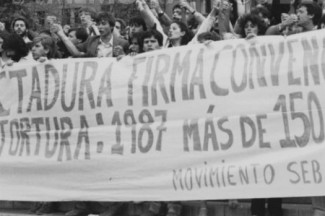
To mark 15 years of ICTJ, we asked staff past and present for memories that stand out to them - moments that throw the stakes of our work into sharp relief and resonate with them years later. Cristián Correa, Senior Associate in ICTJ’s Reparative Justice Program, shares a story about a Chilean mother's thirst to tell her daughter the truth about their past.

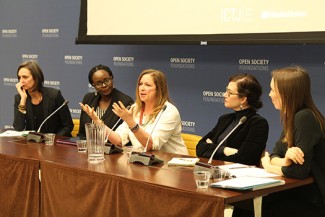
A panel of policy and media experts discusses women's experience in war and the responsibility of media covering their stories at the New York City premiere of a new documentary.

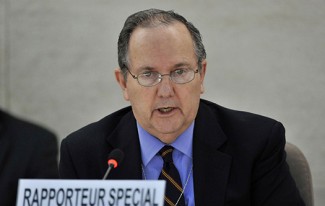
ICTJ has named the globally recognized jurist and human rights expert Juan E. Méndez as its delegate to the Colombian Selection Committee created by the 2016 peace agreement signed between the Colombian government and the Revolutionary Armed Forces of Colombia (FARC).

NEW YORK, February 2, 2016 – A short documentary film depicting the devastating effects of stigma and discrimination against children born of wartime sexual violence, and their mothers, in northern Uganda was released today by the International Center for Transitional Justice (ICTJ) and MediaStorm....

I Am Not Who They Think I Am, a new film by ICTJ and MediaStorm, exposes the stigma facing children born of conflict and their mothers and advocates for their right to reparations and redress from the state.

Potential political interference, poor evidence gathering and difficulty accessing remote areas are some of the main challenges to prosecuting economic and environmental crimes related to armed conflict in the Democratic Republic of Congo. Overcoming these challenges was the focus of a two-day workshop for judges and prosecutors in Goma and Bukavu, organized by the International Center for Transitional Justice (ICTJ), in collaboration with the United States Institute for Peace.