



11 results

Victims, civil society advocates, policymakers, and development partners recently met for a high-level policy roundtable on integrating mental health and psychosocial support (MHPSS) in Ethiopia’s transitional justice process. Organized by ICTJ and the Advocacy Center for Democracy and Development, the convening offered a space for participants to discuss the need for MHPSS and how to improve access to it across the country.

On July 28, 2025, the Somali Regional State Council passed a resolution designating April 6 as Victims’ Memorial Day, formally recognizing those who experienced violence and human rights violations across Ethiopia’s Somali Region. For years, victims and civil society actors, with support from ICTJ and other international partners, have persistently advocated for this acknowledgment, which marks a milestone in Ethiopia’s journey toward accountability and repair.

Human rights organizations in Brazil have created an online platform Brasil Nunca Mais Digital to preserve evidence and other documents related to more than 7,000 political prisoners tried before Brazil’s Military Supreme Court, during that country’s military dictatorship.

This opinion piece by Eduardo González, director of the Truth and Memory program at ICTJ, asks: can you build a solid, legitimate democracy on the sands of silence, or does truth provide a more trustful foundation?

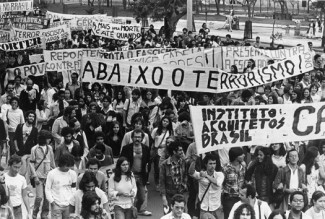
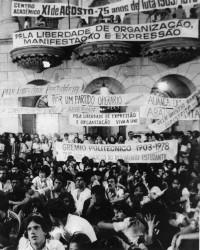
Brazil’s recent decision to examine the abuses of the military dictatorship from several decades ago could change the face of democracy at home, making it more genuine and transparent. At the same time it could have a wider impact, allowing Brazil to take a decisive stand on human rights regionally and internationally.

This year marks the 20th anniversary of the publication of Children of Cain, the first book by writer and journalist Tina Rosenberg. ICTJ spoke with Rosenberg about how political violence has evolved in Latin America over the past 20 years, and the continuing need for accountability for past atrocities.

This year marks the 20th anniversary of the publication of Children of Cain, the first book by writer and journalist Tina Rosenberg. ICTJ spoke with Rosenberg about how political violence has evolved in Latin America over the past 20 years, and the continuing need for accountability for past atrocities.

The second Latin American Conference on Transitional Justice closed July 8. In the concluding remarks, ICTJ Truth and Memory Program Director Eduardo Gonzalez stated that while this conference has focused on sharing the comparative experiences throughout Latin America, this has not been an academic exercise but a call to action. Read more on the conference blog

Although Brazil's dictatorship ended years ago, focus on transitional justice there is peaking now, as debate stirs over how to best address its past. Recent developments - including the Brazilian government's proposal of a truth commission, the opening of national archives, and the Inter-American Court of Human Rights' decision limiting the 1979 amnesty law - are at the core of the discussion. Eduardo Gonzalez, director of ICTJ's Truth and Memory Program, discusses the role accountability for the past can play in Brazil today.

Brazil’s new government is showing strong support for the passage of a bill creating a National Truth Commission investigating past human rights violations, writes Eduardo González, director of ICTJ's Truth and Memory Program. ICTJ also spoke with Marlon Weichert, human rights activist and regional prosecutor for Brazil's Federal Public Ministry, on the current debate surrounding truth-seeking and accountability in Brazil.