

525 results

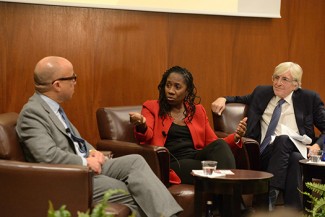
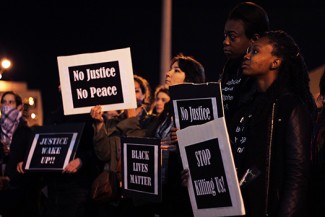
Do the concepts and strategies of transitional justice have a role to play in the United States? Our 2017 Emilio Mignone Lecture asked that question, with Darren Walker, President of the Ford Foundation, and Sherrilyn Ifill, President and Director-Counsel of the NAACP Legal Defense Fund, joining ICTJ's David Tolbert in conversation. Watch the full discussion here.

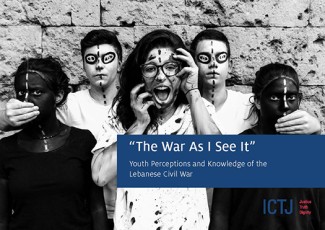
A new, photo-filled publication from the International Center for Transitional Justice details how photos taken by Lebanese young people across the country helped to spark discussion about the disturbing, often-overlooked legacy of the Lebanese civil war.

Lebanon’s civil war continues to impact the Lebanese people, both those who lived through the war and those born after it. While the widespread harms it caused are still visible today, the official denial of both the war and its lasting consequences has left a hole in Lebanon’s histor...

ICTJ and its partners will hosted a national dialogue in Kampala, Uganda on the aftermath of sexual violence. The aim: to shift stigma from victims to perpetrators and end the culture of silence. Sarah Kihika Kasande, head of ICTJ's Uganda office, explains why such efforts are essential to ending impunity and securing a lasting peace in the country.

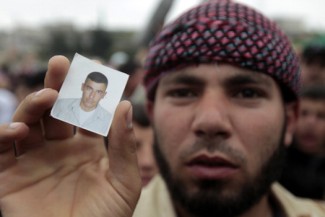
With enforced disappearances on the rise, ICTJ President David Tolbert says the path to prevention is clear: the international community must reorder its priorities and change its approach. The disproportionate attention on counterterrorism takes us further away from accountability and prevention, Tolbert writes. He urges the international community to lead the way in unequivocally censoring governments that use enforced disappearance as a political tactic — and ensuring there can be no impunity for this crime.

Fania Davis thinks the time has come for a truth-telling process about racial injustice in the United States, and she is working to make it a reality. We sat down with her and her colleague, Jodie Geddes, to discuss their vision for a national process, what they hope it would achieve, and what they have learned from their conversations with local leaders so far.

Where does transitional justice stand in Sri Lanka? Kelli Muddell, Director of ICTJ's Gender Justice Program, explores the country's contested historical narratives.

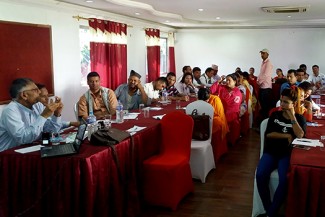
A new ICTJ report on truth and memory in Nepal sparked discussion – and calls for victim-centered policies – at national and local launch events.

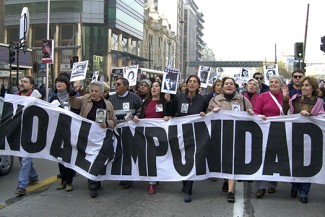
Chile has shown slow but steady progress on ​criminal justice​​. Two recent court decisions convicted a total of 139 ​state ​agents for their roles in the enforced disappearances of 21 Chileans. The rulings – one handed down by the Supreme Court, the other by a first instance judge – highlight the growing momentum towards obtaining justice for victims of the 1973-1990 dictatorship​.​

Children born of wartime sexual violence often face rejection from the communities their mothers call home. For these families, the failure of the state to address the harm they suffered and the enduring stigma leads to their further marginalization. An ICTJ film on this stigma, and the paths to overcome it, sparked discussion at a panel held at the Austrian Mission to the United Nations.