270 results
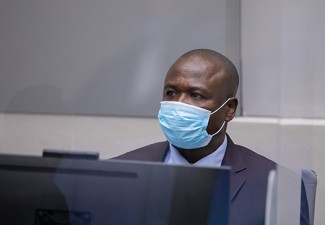
On February 4, 2021, the International Criminal Court issued its judgment in the case of the Prosecutor v Dominic Ongwen. The ICC found Ongwen guilty of 61 counts of crimes against humanity and war crimes committed in Northern Uganda between July 1, 2002, and December 31, 2005. The verdict recognizes the enduring impact of the crimes on the victims, their families, and Ugandan society more generally.

On February 4, 2021, the prominent activist, intellectual, writer, and filmmaker Lokman Slim joined the long list of victims of violence and impunity in Lebanon. The courageous human rights and political activist was found shot to death in his car in southern Lebanon.

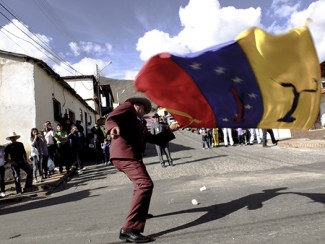
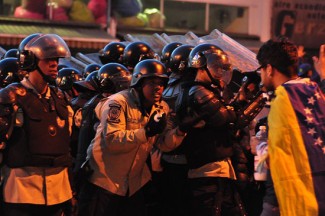
In Venezuela, there is now an absence of representative democracy and a vacuum of public trust in politicians. However, this situation presents an opportunity for other actors and other approaches, so far disparaged by hardliners on both sides. Civil society organizations, which have earned credibility through their dedicated work addressing the humanitarian crisis and defending human rights, can seize this opportunity.

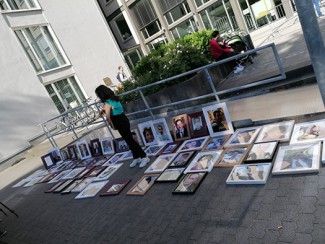
For many victims of human rights violations and international crimes around the world, the prospects of holding perpetrators to account, especially high-level individuals, have long seemed farfetched, given current political and legal hurdles and the limitations of international criminal justice mechanisms. For this reason, the multiple ongoing investigations into international crimes committed in Syria and court cases against suspected perpetrators based on the principle of universal jurisdiction across Europe have offered a ray of hope in an otherwise bleak justice landscape.

The political crisis in Venezuela has reached a breaking point. The upcoming parliamentary elections scheduled for December 6 threaten to deprive the opposition of its institutional foothold, on which the legitimacy of its demand to establish an interim government rests. Moreover, observers both inside and outside Venezuela have repeatedly warned that the conditions are unsuitable for fair and impartial elections. A political solution now depends on the government backpedaling from its recent refusal to postpone the elections and allowing the European Union to observe them. It also requires the opposition to take a clear stance beyond calling for the removal of the president.

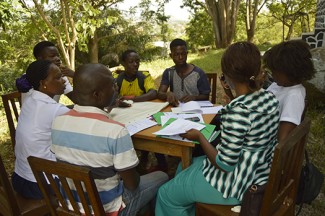
Following the recent closure of ICTJ's office in Côte d’Ivoire, we caught up with Head of the Office Mohamed Suma and Senior Expert Cristián Correa to reflect on ICTJ’s work in the country and with victims, women, and youth, as well as the reasons why ICTJ has chosen to scale down its activities.

As UN member states convene virtually this week for the annual General Assembly, they will likely focus on a narrow list of agenda items, topped by issues related to the deadly coronavirus pandemic and a global economic downturn. For this reason, ICTJ would like to recall the vital importance of justice for global peace, security, health, and development by sharing findings from an analysis of the open debate on transitional justice that the UN Security Council held on February 13, 2020, as part of its peacebuilding and sustaining peace agenda.
On August 18, nearly two decades after Lebanon’s former Prime Minister Rafik Hariri was brutally assassinated in a car bombing, the Special Tribunal for Lebanon delivered a long-awaited conviction. The judgment found Salim Ayyash guilty of conspiracy to commit a terrorist act, committing a terrorist act, the intentional homicide of Hariri and 21 others, and attempted homicide of the 226 injured. However, the tribunal did not find enough evidence that the three other defendants were aware in advance of the conspiracy and thus acquitted them of all charges. This split verdict makes an uncertain situation in Lebanon even more tenuous.

The role of police in society is to protect residents and enforce the rule of law. As a public institution, and particularly one whose function includes the state-sanctioned use of force, the effectiveness of the police depends on its integrity and legitimacy. When the police abuses its power, by brutalizing civilians and or engaging in corruption, it loses its credibility and the public’s trust. In Kenya, enforcement of measures to halt the spread of COVID-19 have been accompanied by acts of police brutality, of the kind that Kenyans have been through multiple times before.

It happened again. George Floyd’s name is now added to the tragic list—already far too long—of other people of color whose lives have been cut short as a direct result of the United States’ long history of racism and white supremacy. We at ICTJ are outraged by the cruel and senseless murder of an unarmed Black man by police officers in Minneapolis, Minnesota. As we try to process this horrific act and grieve the tragic loss of another human life, we must also grapple with the hard truth that it is frankly unsurprising that this list of names continues to grow.