
527 results

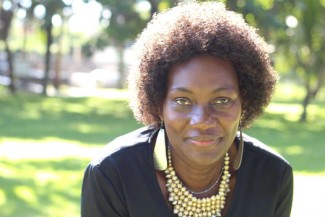
As ICTJ looks back on its 15 years of work, join us in celebrating our allies across the globe who join us in the struggle for human rights, against impunity. To honor their efforts in the trenches of this shared struggle, we will bring you their stories in the weeks and months to come. We begin with Kenya's Jaqy Mutere, who provides both an empathetic ear and a political voice to survivors of sexual violence.

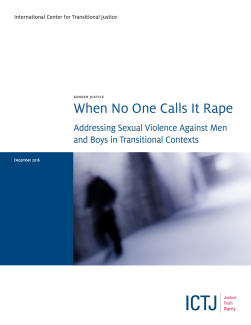
Sexual violence against men and boys is alarmingly common amidst conflict or repression, but these crimes are often mishandled. A new ICTJ report examines how transitional justice efforts in South Africa, Kenya, Cambodia, and beyond have responded to the needs of male victims of sexual violence. What lessons can be drawn from these approaches?

Sexual violence against men and boys in times of conflict or repression is alarmingly common— and takes a markedly consistent form across contexts in terms of how it affects victims and societies as a human rights violation that is taboo to talk about. It has been committed in all cul...

UN operations are due to end in Côte d’Ivoire next June, but the country must pursue a victim-centered approach to justice even after UNOCI leaves. An ICTJ-organized conference works to prepare government, civil society, and the diplomatic community for the UN departure and chart a way towards justice and a stable peace for all of Côte d’Ivoire.

1,300 are still missing in Nepal, nearly a decade after the country's bloody civil war ended. The peace agreement was meant to provide for the families of the disappeared, but today they are still searching for answers. As a new government body begins investigations, victims wonder: is the commission fully committed to addressing their needs?

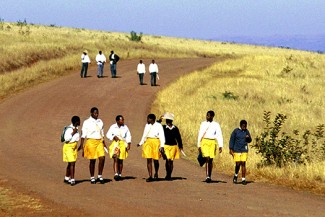
Can education help right the wrongs of the past, especially when the majority of the population was affected by those wrongs? Teboho Moja examines that question in the context of South Africa, where efforts to reform a discriminatory educational system and redress its consequences have been met with mixed results.

A new paper from the International Center for Transitional Justice (ICTJ) offers clear, concrete proposals for a new reparations policy in Côte d’Ivoire for victims of serious human rights violations. The recommendations, informed by extensive work in the affected communities, consider a range of options, including compensation (cash payments), rehabilitation, and symbolic measures.

In order to create lasting reconciliation between the victims of post-election violence and the Côte d’Ivoire state, the reparations program must respond to the most serious consequences of the violence for victims through measures that address their long-lasting socioeconomic, psychosocial, and education-related effects for victims and their children. To do that, ICTJ's Cristián Correa and Didier Gbery spent more than a year discussing needs with victims groups throughout the country.

Understanding education as a form of both reconstruction and reparations is essential for societies in their efforts to address victims’ rights and help victims and their families overcome the consequences of a painful past.

This summer, our Intensive Course on Transitional Justice and Peace Processes brought experts from around the world together in Barcelona to examine how transitional mechanisms can be integrated into peace negotiations. Read about the course and watch interviews with our experts.